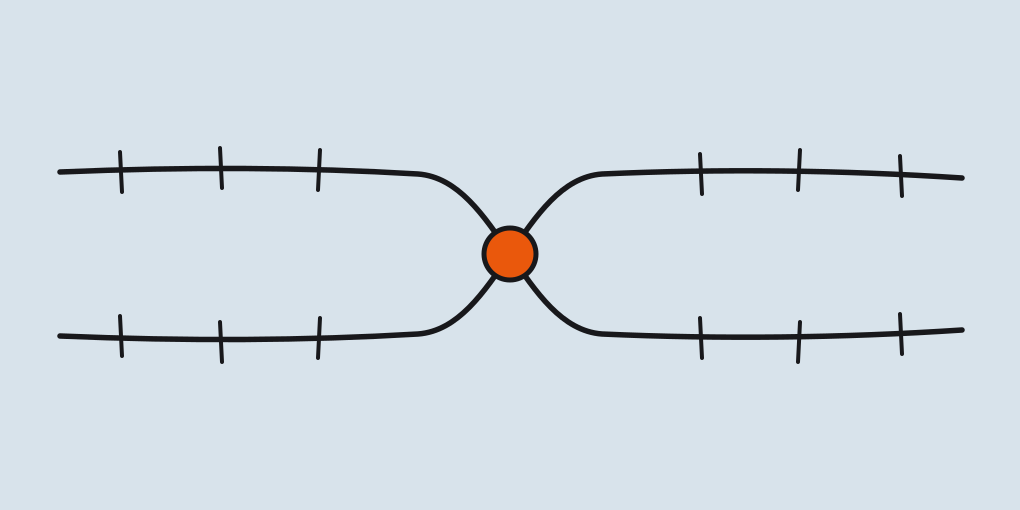
The Border Station
Belgian trains run left, Dutch trains run right, and in two centuries nobody has paid for it.
The train from Antwerp crosses the Dutch border on the left-hand track, waits at a signal in Roosendaal, then slides across to the other track and carries on to Rotterdam. Belgian trains run on the left. Dutch trains run on the right. Both countries drive their cars on the right, and in nearly two centuries this has confused precisely nobody, because a train and a car have never once had to agree on anything.
Belgium runs left because the first line opened in 1835 (opens in a new tab) with three locomotives shipped from Stephenson’s works and two Belgian engineers who had gone to England to learn how it was done and copied what they saw. The reason was gone within a generation. The convention stayed. It’s still there under every commuter in the country.
We’d call that technical debt and open a ticket.
When two parts of an estate disagree about something structural, the reflex is to pick a winner and normalize. Same error envelope everywhere. Same retry semantics. Same date handling, because it’s embarrassing that the billing service and the reporting service still argue about what a month is. The project gets a name. It gets a quarter. It usually gets a second quarter.
What the railways worked out is cheaper. The inconsistency is real and permanent, and it can’t travel. The whole price of disagreeing gets paid at three crossovers on Dutch soil, a signal in Roosendaal, a flyover south of Rotterdam, and one at Maastricht that nobody outside the signalling office thinks about.
That price isn’t nothing. Somebody has to know both rulebooks and be awake at the seam when it goes wrong. But it stops there. Belgium never had to change. The Netherlands never had to change. Somebody built the crossovers and went home.
AI flipped the math on the windows that were actually broken. It didn’t flip anything here, because there was never a bill to pay.
An inconsistency that can’t leave its own network isn’t debt. It’s geography.
Ask that before the normalization project gets funded. Does anything actually have to cross between the two halves, and what does it cost to handle it right at the crossing instead of everywhere at once? Sometimes the glass genuinely needs breaking. Most of the time you need one crossover and the discipline to stop.
Consistency is what you buy when containment isn’t available.